Saturday, October 3, 2026

Summer Heat Wave - Keeping your pups cool


3 Hot, Sleepy Dogs - heat will make your dogs more lethargic than usual.

We are having a prolonged heat wave here in Southern California and many people who live near the coast do not have central AC.  Imagine having a fur coat and dealing with this heat.  Here are a few tips to keep your pets a little more comfortable in this heat:

1)  Keep your dogs indoors - if the inside of your house is cooler than outside, bring your dogs indoors to avoid heat stroke.  If the heat outdoors is intolerable for you then your dog is likely to feel the same way (if not more so). 

2) Walk your pets in the early morning or after the sun goes down.  Not only is it cooler but the pavement won't burn the pads of their feet.  Avoid hiking during a heat wave so that you do not expose your dog to the risk of heat exhaustion.

3)  Avoid intense exercise during heat waves - when we have 90+ weather, avoid intense exercise.  If your dog is elderly, overweight, has a medical condition (especially respiratory or cardiac) or very young, they are more vulnerable to the heat.


4)  Protect the Feet, Do the Barefoot Test - On hot summer days I often see people walking their dogs on the sidewalk and asphalt in the middle of the day.   I often cringe when I see this because the pavement can heat up significantly and because we humans wear shoes, we often don't realize how hot the pavement is.  


I used to work with clients using my dog, Kiku, as a decoy dog and I will not schedule sessions in the middle of the day because I fear the sidewalk and black asphalt will burn her pads.  

I will often do what I call the barefoot test and put my barefoot on the asphalt to test out how hot it is. Once, when my neighborhood reached 88 degrees F.  I did the barefoot test on my street and I could hold my foot on the pavement for only a few seconds because it was so hot.  So imagine when temperatures reach into the 90s.


At 88 degrees my foot started burning after a few seconds.

Watch for signs that your dog is under distress:  limping, licking feet, whimpering, walking gingerly, trying to get to the grass, lying down in the shade.

Puppy foot pads are more delicate - if you have a puppy, their feet are more delicate because the pads have not yet developed tough callouses.  Be extra careful during the period when your puppy is in this phase.  

Check your dogs pads for cracks, blisters, bleeding or burns.  If you find any injuries, wash the wound with soap and water and take your dog to the vet for further treatment.  

Check all hard surfaces including gravel.  Here is a hot Kiku trying to get some shade

So this heatwave be mindful of your dog overheating and burning those cute doggy feet.  


5) Evaporative Cooling - I will wet down the fur between the shoulder blades and back of the neck to help cool down my dog via evaporative cooling.  If you set up a fan, dogs will sleep in front of the fan to enhance this effect.

6)  Freeze a partially filled water bottle - wrap it up in a towel and place it near your dog.  Often they will sleep against it or use it as a pillow.  Senior dogs may not be able to tolerate the heat as well as younger dogs.

Kiku is sleeping against a frozen water bottle wrapped with a towel.


7)  Raised loungers - raised beds or loungers can help with air circulation.  And, many dogs like sleeping on them when it is hot.  The lounger in the picture below is from Doggie Loungers, but you can find a similar style at Summer Winds.


8) Hydration - it goes without saying that you want to make sure your pet is well-hydrated.  Keep extra bowls of water out if you are going to be out of the house for long periods of time.

9) Do not leave your dog in the car - I know this seems obvious but every summer there are reports of dogs dying in locked cars.  Cars, even with the windows cracked, can heat up very quickly on a hot day turning the inside of a car into an oven.  It only takes minutes for the temperature to go up 20 degrees. 

Do you have any other tips you would like to share.  Post them below.  Happy Training!

Thursday, July 2, 2026

Fear of Fireworks - Keeping Your Pets Safe During the Holidays


With 4th of July around the corner, it is important to keep your pet safe and secure.   Many dogs are afraid of fireworks and loud noises.  Here are some things to keep in mind to keep your pet safe and happy this holiday, especially if you are out celebrating and ringing in the New Year:


* Avoid keeping your pet in the yard.  Fearful dogs will frantically try to dig, jump or climb their way out of the yard to escape the noise. Many dogs get lost and end up in the shelter this way. Every year shelters fill up with dogs that ran away from their yard.  

*Make sure that your pet has proper ID in the event that he/she gets lost. Consider microchipping your dog because dog collars and ID Tags can break or fall off.  

*Avoid the temptation to take your dog to fireworks shows or outdoors. A fearful dog could bolt and get lost. Fearful dogs can also feel trapped and may lunge or bite people or other dogs around them. Play it safe, keep them at home.  I have read many stories about dogs who have fled or have been traumatized at fireworks shows.

*Keep your pets in a secure place for your pet stay in.  This can be a crate or a quiet, pet-proofed room in your home that does not receive as much outside noise. Dogs can try to chew their way out of an area when scared so make sure it is a secure area.  Close your windows and front door to shut out outside noises.

*What if you have a new dog or puppy and this is their first 4th of July? Play with your dog. During those hours when fireworks happen (usually 9 p.m. to midnight here in Los Angeles), play games with your dog. Play fetch or tug of war. Give your dog a toy to play with or work on a Nina Ottosson interactive puzzle with your dog. Click here for examples. Interacting with you will keep your dog's mind off the noises outside and on the games you are playing with your dog. Here is an example of my dog working on Tug-a-Jug under my supervision.  She is so preoccupied with working on this toy that outside noises are unlikely to distract her:


*Consider playing music or keep the T.V. on as background noise. There is music that have been created specifically to calm dogs.  Through a Dog's Ear is an example of music designed to keep dogs calm. You can purchase the CD on Amazon or play via Spotify


*Alternative remedies:  For mild cases, some dogs respond well to flower essences and homeopathic remedies such as calming chews. Bach's Rescue Remedy for pets is one of the older brands out there and can be found in most natural pet stores.  For homeopathic remedies you can consult with a homeopathic veterinarian for suggestions and dosage instructions.


*Body Wraps: many people have had success with body wraps which in effect "swaddle" your dog. I often use this product with fearful or anxious dogs. In her book, "Help for Your Fearful Dog," Nicole Wilde discusses a variety of methods of doing this and the proper way of introducing your dog to a wrap. In addition, there is a body vest marketed under the brand names, "Anxiety Wrap" and "Thundershirt" designed to achieve the same result. However, you should first acclimate your dog to the vest before a storm or fireworks so your dog does not react negatively to wearing the vest.  Here is one of my dogs modeling a Thundershirt:


*Another calming product is Dog/Cat Appeasing Pheromone that can be sprayed on your pet's bedding or used as a room atomizer. There is also a collar version. It is usually sold in pet stores under the brand name "Comfort Zone" or "Adaptil."

 
*For severe cases talk to your vet:  for severe cases of anxiety or if your dog is at risk of injuring himself/herself, prescription medication may be necessary to keep your dog calm and safe. In such cases,  it is best consult with your veterinarian well in advance of the holiday.


My old akita had mild to moderate anxiety to fireworks. I made sure that he was in a pet-proofed room with the T.V. on and the windows closed. Sometimes I distracted him with toys and games he liked to play. I also used a Thundershirt and distracted him with Nina Ottosson puzzles which seemed to help:


Recommended Reading:


Los Angeles Dog Trainer:  http://www.pawsitivefeedback.com
'


Thursday, June 26, 2025

Keeping your Dog Safe this 4th of July


With 4th of July just around the corner, it is important to keep your pet safe and secure.   Many dogs are afraid of fireworks and loud noises.  Here are some things to keep in mind to keep your pet safe and happy this holiday:


* Avoid keeping your pet in the yard.  Fearful dogs will frantically try to dig, jump or climb their way out of the yard to escape the noise. Many dogs get lost and end up in the shelter this way. Every year shelters fill up with dogs that ran away from their yard.  

*Make sure that your pet has proper ID in the event that he/she gets lost. Consider microchipping your dog because dog collars and ID Tags can break or fall off.  

*Avoid the temptation to take your dog to fireworks shows or outdoors. A fearful dog could bolt and get lost. Fearful dogs can also feel trapped and may lunge or bite people or other dogs around them. Play it safe, keep them at home.  I have read many stories about dogs who have fled or have been traumatized at fireworks shows.

*Keep your pets in a secure place for your pet stay in.  This can be a crate or a quiet, pet-proofed room in your home that does not receive as much outside noise. Dogs can try to chew their way out of an area when scared so make sure it is a secure area.  Close your windows and front door to shut out outside noises.

*What if you have a new dog or puppy and this is their first 4th of July? Play with your dog. During those hours when fireworks happen (usually 9 p.m. to midnight here in Los Angeles), play games with your dog. Play fetch or tug of war. Give your dog a toy to play with or work on a Nina Ottosson interactive puzzle with your dog. Click here for examples. Interacting with you will keep your dog's mind off the noises outside and on the games you are playing with your dog. Here is an example of my dog working on Tug-a-Jug under my supervision.  She is so preoccupied with working on this toy that outside noises are unlikely to distract her:


*Consider playing music or keep the T.V. on as background noise. There is music that have been created specifically to calm dogs.  Through a Dog's Ear is an example of music designed to keep dogs calm. You can purchase the CD on Amazon or play via Spotify


*Alternative remedies:  For mild cases, some dogs respond well to flower essences and homeopathic remedies such as calming chews. Bach's Rescue Remedy for pets is one of the older brands out there and can be found in most natural pet stores.  For homeopathic remedies you can consult with a homeopathic veterinarian for suggestions and dosage instructions.


*Body Wraps: many people have had success with body wraps which in effect "swaddle" your dog. I often use this product with fearful or anxious dogs. In her book, "Help for Your Fearful Dog," Nicole Wilde discusses a variety of methods of doing this and the proper way of introducing your dog to a wrap. In addition, there is a body vest marketed under the brand names, "Anxiety Wrap" and "Thundershirt" designed to achieve the same result. However, you should first acclimate your dog to the vest before a storm or fireworks so your dog does not react negatively to wearing the vest.  Here is one of my dogs modeling a Thundershirt:


*Another calming product is Dog/Cat Appeasing Pheromone that can be sprayed on your pet's bedding or used as a room atomizer. There is also a collar version. It is usually sold in pet stores under the brand name "Comfort Zone" or "Adaptil."

 
*For severe cases talk to your vet:  for severe cases of anxiety or if your dog is at risk of injuring himself/herself, prescription medication may be necessary to keep your dog calm and safe. In such cases,  it is best consult with your veterinarian well in advance of the holiday.


My old akita had mild to moderate anxiety to fireworks. I made sure that he was in a pet-proofed room with the T.V. on and the windows closed. Sometimes I distracted him with toys and games he liked to play. I also used a Thundershirt and distracted him with Nina Ottosson puzzles which seemed to help:


Recommended Reading:


Los Angeles Dog Trainer:  http://www.pawsitivefeedback.com
'


Saturday, June 26, 2021

Is your dog afraid of fireworks - safety tips for 4th of July

With 4th of July just around the corner, it is important to keep your pet safe and secure.   Many dogs are afraid of fireworks and loud noises.  Here are some things to keep in mind to keep your pet safe and happy this holiday:

* Avoid keeping your pet in the yard.  Fearful dogs will frantically try to dig, jump or climb their way out of the yard to escape the noise. Many dogs get lost and end up in the shelter this way. Every year shelters fill up with dogs that ran away from their yard.  

*Make sure that your pet has proper ID in the event that he/she gets lost. Consider microchipping your dog because dog collars and ID Tags can break or fall off.  

*Avoid the temptation to take your dog to fireworks shows or outdoors. A fearful dog could bolt and get lost. Fearful dogs can also feel trapped and may lunge or bite people or other dogs around them. Play it safe, keep them at home.  I have read many stories about dogs who have fled or have been traumatized at fireworks shows.

*Keep your pets in a secure place for your pet stay in.  This can be a crate or a quiet, pet-proofed room in your home that does not receive as much outside noise. Dogs can try to chew their way out of an area when scared so make sure it is a secure area.  Close your windows and front door to shut out outside noises.

*What if you have a new dog or puppy and this is their first 4th of July? Play with your dog. During those hours when fireworks happen (usually 9 p.m. to midnight here in Los Angeles), play games with your dog. Play fetch or tug of war. Give your dog a toy to play with or work on a Nina Ottosson interactive puzzle with your dog. Click here for examples. Interacting with you will keep your dog's mind off the noises outside and on the games you are playing with your dog. Here is an example of my dog working on Tug-a-Jug under my supervision.  She is so preoccupied with working on this toy that outside noises are unlikely to distract her:


*Consider playing music or keep the T.V. on as background noise. There are music CDs that have been created specifically to calm dogs.  Through a Dog's Ear is an example of a CD series. 


*Alternative remedies:  For mild cases, some dogs respond well to flower essences and homeopathic remedies such as calming chews. Bach's Rescue Remedy for pets is one of the older brands out there and can be found in most natural pet stores.  For homeopathic remedies you can consult with a homeopathic veterinarian for suggestions and dosage instructions.


*Body Wraps: many people have had success with body wraps which in effect "swaddle" your dog. I often use this product with fearful or anxious dogs. In her book, "Help for Your Fearful Dog," Nicole Wilde discusses a variety of methods of doing this and the proper way of introducing your dog to a wrap. In addition, there is a body vest marketed under the brand names, "Anxiety Wrap" and "Thundershirt" designed to achieve the same result. However, you should first acclimate your dog to the vest before a storm or fireworks so your dog does not react negatively to wearing the vest.


*Another calming product is Dog Appeasing Pheromone that can be sprayed on your dog's bedding or used as a room atomizer. There is also a collar version. It is usually sold in pet stores under the brand name "Comfort Zone" or "Adaptil."


*For severe cases talk to your vet:  for severe cases of anxiety or if your dog is at risk of injuring himself/herself, prescription medication may be necessary to keep your dog calm and safe. In such cases,  it is best consult with your veterinarian before the holiday.


My old akita had mild to moderate anxiety to fireworks. I made sure that he was in a pet-proofed room with the T.V. on and the windows closed. Sometimes I distracted him with toys and games he liked to play. I also used a Thundershirt and distracted him with Nina Ottosson puzzles which seemed to help:


Los Angeles Dog Training: www.pawsitivefeedback.com
Recommended Reading:


Los Angeles Dog Trainer:  http://www.pawsitivefeedback.com
'

Tuesday, October 27, 2020

Halloween: a few safety tips for your pet

Dog in Halloween outfit


With Halloween quickly approaching, I just wanted to highlight some safety tips for our pets:

Bring your pets indoors—even if your pet is used to being outdoors, bring your cats and dogs indoors. Unfortunately, animals can be the target of pranks and teasing during Halloween, especially black cats.

Keep your pet in a safe room —little children and energetic teenagers dressed up as goblins, pirates, scarecrows or the Grim Reaper may be a bit too much for our furry friends, especially if they are on the fearful side. Sometimes, it is best to have our pets in a safe room (covered crate, a gated-off area or a back bedroom) with a stuffed Kong or bully stick. With the door constantly opening and closing, we want to make sure our pets do not accidentally run out the door.  So, keeping them in a safe room will prevent accidental escapes.

Make sure your dog has an I.D. tag and is microchipped - during the holidays is when a lot of lost pets are turned into shelters.  Pets can accidentally run out of the door either because of fear or someone carelessly leaving the door open.  Microchipping has saved many pets lives and resulted in many happy returns. 

Make sure your dog knows how to "wait" behind the door or keep your dog on a leash - If your dog is going to be loose in your home (I prefer using a safe room), make sure he/she understands the cue for “waiting” behind the door and can handle seeing people in costumes. Keep your dog on a leash to prevent darting out the door. If he/she shows any signs of stress, anxiety, or aggression, put your dog in a safe room.  Pet gates are another good option. 

Keep your pet at home—Although it is tempting to have your dog go trick or treating with the kids, with so many strange looking people out and about, it can scare your dog. Your dog may panic and get loose or react negatively and nip a costumed stranger trying to pet him/her.

Go on Candy Patrol—often the day after Halloween, I find candy and cellophane wrappers on my porch and front yard. Make sure you check your home and front yard for stray candy so that your pet does not accidentally swallow it. Raisins and chocolate can be toxic to dogs as well as the artificial sweetener, xylitol found in chewing gum and other sugarless candies.

Beware of Jack-O-Lanterns & Candles—sometimes our pets are a little clueless about fire. Happy dogs with big wagging tails or cats jumping on a table can knock over a candle.   Also young animals may be overly curious and burn themselves.  Keeping your dog in a safe room can prevent these mishaps.

Some dogs hate costumes—while cute, some dogs are not very tolerant of costumes and can get cranky and snappy. If your dog looks stressed, unhappy or uncomfortable, take it off.  Here is a primer on dog body language so that you can identify the more common canine stress signals.  


Dog wearing bandana

A bandana is as much as my dog can handle. A costume would put her in a very foul mood.

Sunday, April 5, 2020

Sheltering in Place with your pet - keeping you and your pet engaged during the Coronavirus epidemic


During this pandemic sheltering in our homes has become a way of life. Being cooped up in the house can be challenging for both you and your pet.
Fear not, this just changes the activities that you and your pet can engage in.  Here are some examples:

Walking your dog - in cities where it is permitted, you can keep up with your daily neighborhood walks.* Don't forget to wear your face mask and maintain at least 6 feet for social distancing. If you are unsure, consult with your mayor's or governor's websites regarding local guidelines for sheltering in place during this pandemic to make sure walking in your neighborhood is permitted. 

*If you are a senior citizen or in an "at-risk" or "vulnerable" group, please make sure you follow your doctor's orders and/or city or state's guidelines regarding staying at home.  Walking in the neighborhood may not be an option for you if you are at-risk.  

Training – why not use this time in the house to reinforce some of your dog’s training? Put together a series of behaviors for your dog to perform and reward your dog for the last behavior in the chain. Go to your spot, lie down and stay is an example of a training combination. Or teach your dog a new trick. YouTube and other websites have videos of how to teach your dog to do simple tricks.  Just remember to change the order and combinations of your tricks so your dog does not begin to memorize the order or sequence of tricks.

My YouTube Channel has some videos you can refer to for training dogs, cats and even birds.

Hide and Seek – playing hide and seek games where your dog has to find you in different parts of the house is a great way to reinforce your dog’s recall (coming to you).  When training a dog to come when called, always remember that when they find you to reward them with effusive praise, petting and/or treats. Teach them that finding you is a big party.

Toys
Some toys can be used when the dog is left alone or for times when you need to keep your dog occupied (e.g.when you are on a call, you are busy at the computer, when you are having a meal). These toys must be fairly indestructible and have no small parts. Most people have Kong toys but there are many others you can order online or obtain from most pet stores.

Kongs (http://www.kongcompany.com) are great toys that can be stuffed with your dog's kibble, treats, and other foods. Your dog will spend a lot of time trying to get the contents out of the Kong. Think of it like a doggie pacifier. For heavy chewers the Extreme Kong (black version)would be a better choice. The Kong website has instructions on how to use it with recipes and I also posted a blog about the many uses of Kongs which you can read about here.

One of my favorite ways to use a Kong is to hide one or more Kongs around the house (I like to use places other than the kitchen or dining room) and ask your dog to find it. My dogs have been taught that the word “find it” means go hunt for the object. An empty Kong makes a great fetch toy as well.


Tug a Jug - This toy, made by Petsafe Pet Products, requires the dog to manipulate the jug and rope to try to get the treats out. If you use smaller treats, it is easier for the dog to get the treats. If the rope is destroyed, you can place balls in the jug for continued play. The other nice thing about this toy is that the jug is see-through so the dogs can see the treats inside. This toy has a high difficulty rating in my book so it may be too difficult for inexperienced dogs like puppies.
Here is a video of my two year old Akita, Kiku, who takes a patient and systematic approach to problem solving:


Twist and Treat – this is another similar rubber toy called the Twist and Treat is made by PetSafe. This toy is probably better for smaller dogs and less powerful chewers. This toy has the advantage of being adjustable depending on the size threat you are using so I find it easier for most dogs.


Buster Cube -  The Buster Cube has been on the market a long time. This was one of the original toys I used with my 10 year old Shiba Inu when she was a puppy. The Buster Cube dispenses dry treats randomly when the dog moves the toy around. You can also adjust the level of difficulty depending on the skills of your dog.


Kibble Nibble: This is another Premier toy similar to the Buster Cube. The object of the game is to roll the ball around to make the kibble come out.The ball is see-through and the dog can see how much kibble is left. It takes some experimentation to determine what size kibble/treat works best so that it is not too easy or too hard.

Here is video of my Shiba Inu, Mitsu, playing with the ball. She is almost 11 years old now and she is going after the ball with gusto. This video is not sped up, this old gal is actually this frenetic. She ended up playing with this ball for about 15 minutes, did a couple of shiba yells at the ball, got a drink of water and came back for another 10 minutes before I took it away from her. During the video you can see a treat flying out of the ball:


Toys Requiring Owner's Participation


This category of toys are toys that involve the participation and supervision of the owner. Examples of traditional toys requiring owner participation are balls, fetch toys, tug of war toys and frisbees. There are also toys that involve problem solving skills. Nina Ottoson has created a whole line of toys which help hone your dog's problem-solving skills and at the same time help develop the bond with your dog. These toys require human supervision and they must not be left alone with your dog because of the moving parts and materials that can be chewed up into small pieces if unsupervised.

The Dog Brick - this toy requires the dog to remove the bricks and slide the covers to get to the treats. The link provided contains an instructional video on how to use this toy. Below is a video I made showing how my dog solved the brick.


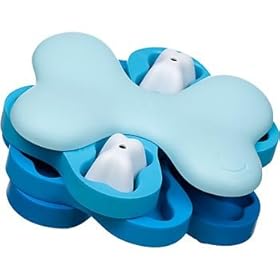
Dog Tornado: This toy has a higher difficulty rating than the Dog Brick and it is definitly more challenging. What is fun about this toy is that you can potentially put your dog's entire meal (especially for small dogs) in the Tornado thereby slowing down their eating and preventing gulping their food. Again, these toys require your supervision because there are small parts.


Here is a video of my female akita, who is a little more sophisticated at solving puzzles, using the Tornado at a more advanced setting to make it more difficult to have access to the treats:


Cat Training and Toys

And some of these toys are not limited to use for dogs. Even cats can get in on the fun. Here is my cat using the Dog Tornado as a way to keep her occupied and to prevent her from gulping down food too fast.  


You can even train your cat to dog the same tricks as your dog!


For more videos on training you can go to my YouTube channel.


Take advantage of this time at home to bond with your pet and most of all, stay safe everyone!

Monday, January 14, 2019

Foul Weather Friends

Now that the rainy season has officially started here in Southern California, you may find that you are holed up in your house with your pet because of inclement weather. Your dog may not be able to take his/her daily walks and whenever you look up you find a pair of big, sad eyes staring at you expectantly, anticipating every move that you make.

Fear not, being indoors just changes the activities that your pet can engage in. Rainy days are when I break out some of my favorite interactive dog toys and play some indoor games that reinforce my dog’s training. Here are some examples:

Training – why not use that time in the house to reinforce some of your dog’s training? Put together a series of behaviors for your dog to perform and reward your dog for the last behavior in the chain. Go to your spot, lie down and stay is an example of a training combination. Or teach your dog a new trick. YouTube and other websites have videos of how to teach your dog to do simple tricks.

Hide and Seek – playing hide and seek games where your dog has to find you in different parts of the house is a great way to reinforce your dog’s recall (coming to you).  When training a dog to come when called, always remember that when they find you to reward them with praise, petting and/or treats.  Teach them that finding you is a big party.

Toys
Some toys can be used when the dog is left alone or for times when you need to keep your dog occupied (e.g.when you have guests over, you are busy at the computer, when you are having a meal). These toys must be fairly indestructible and have no small parts. Most people have Kong toys but there are many others you can order online or obtain from most pet stores.

Kongs (http://www.kongcompany.com) are great toys that can be stuffed with your dog's kibble, treats, and other foods. Your dog will spend a lot of time trying to get the contents out of the Kong. Think of it like a doggie pacifier. For heavy chewers the Extreme Kong (black version)would be a better choice. The Kong website has instructions on how to use it with recipes and I also posted a blog about the many uses of Kongs which you can read about here.

One of my favorite ways to use a Kong is to hide one or more Kongs around the house (I like to use places other than the kitchen or dining room) and ask your dog to find it. My dogs have been taught that the word “find it” means go hunt for the object. An empty Kong makes a great fetch toy as well.


Tug a Jug - This toy, made by Petsafe Pet Products, requires the dog to manipulate the jug and rope to try to get the treats out. If you use smaller treats, it is easier for the dog to get the treats. If the rope is destroyed, you can place balls in the jug for continued play. The other nice thing about this toy is that the jug is see-through so the dogs can see the treats inside. This toy has a high difficulty rating in my book so it may be too difficult for inexperienced dogs like puppies.
Here is a video of my two year old Akita, Kiku, who takes a patient and systematic approach to problem solving:


Twist and Treat – this is another similar rubber toy called the Twist and Treat is made by PetSafe. This toy is probably better for smaller dogs and less powerful chewers. This toy has the advantage of being adjustable depending on the size threat you are using so I find it easier for most dogs.


Buster Cube -  The Buster Cube has been on the market a long time. This was one of the original toys I used with my 10 year old Shiba Inu when she was a puppy. The Buster Cube dispenses dry treats randomly when the dog moves the toy around. You can also adjust the level of difficulty depending on the skills of your dog.


Kibble Nibble: This is another Premier toy similar to the Buster Cube. The object of the game is to roll the ball around to make the kibble come out.The ball is see-through and the dog can see how much kibble is left. It takes some experimentation to determine what size kibble/treat works best so that it is not too easy or too hard.


Here is video of my Shiba Inu, Mitsu, playing with the ball. She is almost 11 years old now and she is going after the ball with gusto. This video is not sped up, this old gal is actually this frenetic. She ended up playing with this ball for about 15 minutes, did a couple of shiba yells at the ball, got a drink of water and came back for another 10 minutes before I took it away from her. During the video you can see a treat flying out of the ball:


Toys Requiring Owner's Participation

This category of toys are toys that involve the participation of the owner. Examples of traditional toys requiring owner participation are balls, fetch toys, tug of war toys and frisbees. There are also toys that involve problem solving skills. Nina Ottoson has created a whole line of toys which help hone your dog's problem-solving skills and at the same time help develop the bond with your dog. These toys require human supervision and they must not be left alone with your dog.

The Dog Brick - this toy requires the dog to remove the bricks and slide the covers to get to the treats. The link provided contains an instructional video on how to use this toy. Below is a video I made showing how my dog solved the brick.


Dog Tornado: This toy has a higher difficulty rating than the Dog Brick and it is definitly more challenging. What is fun about this toy is that you can potentially put your dog's entire meal (especially for small dogs) in the Tornado thereby slowing down their eating and preventing gulping their food. Again, these toys require your supervision because there are small parts.


Here is a video of my female akita, who is a little more sophisticated at solving puzzles, using the Tornado at a more advanced setting to make it more difficult to have access to the treats:


And some of these toys are not limited to use for dogs. Even cats can get in on the fun. Here is my cat using the Dog Tornado as a way to keep her occupied and to prevent her from gulping down food too fast.

Wednesday, January 9, 2019

Teaching a Dog to Ring a Bell to go outside

Today I was being interviewed at a local radio station about dog training. A caller off the air asked me about teaching a dog to let you know that they need to go outside. One way you can do this is to teach the dog to ring a bell. A few years ago, I taught my Akita puppy to ring the bell when she wants to go outside. The way I did it was to first teach my dog to “target” objects. That is, to teach her to touch objects with her nose. I started off with teaching her to simply touch my open hand and rewarding her with a treat when I felt her cold nose on my palm. Once she got the hang of touching my palm, I added a verbal cue such as “touch.” Once your dog learns to “touch” an easy object like your hand for instance, you can move on to teaching her to “touch” objects like a bell hanging on a door. Then, it is a matter of her making the association that every time she touches the bell and the bell actually rings, the door magically opens and she can go outside to play or go to the bathroom. It may take several sessions for the dog to make the connection that touching the bell means that you will open the door. I have woken up in the middle of the night to the ringing of the bell because one of my dogs had to make an “emergency” potty break. The funny thing is that my older dog who was never taught this behavior has picked up on it without any formal training and he also rings the bell when he needs to go outside. The following video demonstrates how to teach a dog to target an object and it also shows one of my dogs ringing a bell to go outside: 


Caveat:  Some smart dogs will start ringing the bell just to go outside and chase the squirrel or play.  In these cases you must pay close attention to the behavior of the dog and her potty schedule.  If I think that she really needs to go I open the door and escort her outside.  If no potty happens, she comes right back inside.   By careful observation, you can tell the difference by the urgency of the behavior.  My dog started doing this and when I put her back inside, if she tried to ring again soon after (and I was pretty sure there she did not need to go to the bathroom, I ignored the ringing).  Eventually the dog will learn that she gets to go outside for potty breaks but will be brought back in or ignored if the ringing is not related to going to the bathroom or if it is repeated or excessive. It requires pretty good observational skills and knowing your dog's typical "I need to pee behavior." So, you can see that there is a downside to this method and you will have to be careful about how you manage this behavior.