With Halloween quickly approaching, I just wanted to highlight some safety tips for our pets:
Bring your pets indoors—even if your pet is used to being outdoors, bring your cats and dogs indoors. Unfortunately, animals can be the target of pranks and teasing during Halloween, especially black cats.
Keep your pet in a safe room —little children and energetic teenagers dressed up as goblins, pirates, scarecrows or the Grim Reaper may be a bit too much for our furry friends, especially if they are on the fearful side. Sometimes, it is best to have our pets in a safe room (covered crate, a gated-off area or a back bedroom) with a stuffed Kong or bully stick. With the door constantly opening and closing, we want to make sure our pets do not accidentally run out the door. So, keeping them in a safe room will prevent accidental escapes.
Make sure your dog has an I.D. tag and is microchipped - during the holidays is when a lot of lost pets are turned into shelters. Pets can accidentally run out of the door either because of fear or someone carelessly leaving the door open. Microchipping has saved many pets lives and resulted in many happy returns.
Make sure your dog knows how to "wait" behind the door or keep your dog on a leash - If your dog is going to be loose in your home (I prefer using a safe room), make sure he/she understands the cue for “waiting” behind the door and can handle seeing people in costumes. Keep your dog on a leash to prevent darting out the door. If he/she shows any signs of stress, anxiety, or aggression, put your dog in a safe room. Pet gates are another good option.
Keep your pet at home—Although it is tempting to have your dog go trick or treating with the kids, with so many strange looking people out and about, it can scare your dog. Your dog may panic and get loose or react negatively and nip a costumed stranger trying to pet him/her.
Go on Candy Patrol—often the day after Halloween, I find candy and cellophane wrappers on my porch and front yard. Make sure you check your home and front yard for stray candy so that your pet does not accidentally swallow it. Raisins and chocolate can be toxic to dogs as well as the artificial sweetener, xylitol found in chewing gum and other sugarless candies.
Beware of Jack-O-Lanterns & Candles—sometimes our pets are a little clueless about fire. Happy dogs with big wagging tails or cats jumping on a table can knock over a candle. Also young animals may be overly curious and burn themselves. Keeping your dog in a safe room can prevent these mishaps.
Some dogs hate costumes—while cute, some dogs are not very tolerant of costumes and can get cranky and snappy. If your dog looks stressed, unhappy or uncomfortable, take it off. Here is a primer on dog body language so that you can identify the more common canine stress signals.
A bandana is as much as my dog can handle. A costume would put her in a very foul mood.
During this pandemic sheltering in our homes has become a way of life. Being cooped up in the house can be challenging for both you and your pet. Fear not, this just changes the activities that you and your pet can engage in. Here are some examples: Walking your dog - in cities where it is permitted, you can keep up with your daily neighborhood walks.* Don't forget to wear your face mask and maintain at least 6 feet for social distancing. If you are unsure, consult with your mayor's or governor's websites regarding local guidelines for sheltering in place during this pandemic to make sure walking in your neighborhood is permitted. *If you are a senior citizen or in an "at-risk" or "vulnerable" group, please make sure you follow your doctor's orders and/or city or state's guidelines regarding staying at home. Walking in the neighborhood may not be an option for you if you are at-risk. Training – why not use this time in the house to reinforce some of your dog’s training? Put together a series of behaviors for your dog to perform and reward your dog for the last behavior in the chain. Go to your spot, lie down and stay is an example of a training combination. Or teach your dog a new trick. YouTube and other websites have videos of how to teach your dog to do simple tricks. Just remember to change the order and combinations of your tricks so your dog does not begin to memorize the order or sequence of tricks. My YouTube Channel has some videos you can refer to for training dogs, cats and even birds. Hide and Seek – playing hide and seek games where your dog has to find you in different parts of the house is a great way to reinforce your dog’s recall (coming to you). When training a dog to come when called, always remember that when they find you to reward them with effusive praise, petting and/or treats. Teach them that finding you is a big party. Toys Some toys can be used when the dog is left alone or for times when you need to keep your dog occupied (e.g.when you are on a call, you are busy at the computer, when you are having a meal). These toys must be fairly indestructible and have no small parts. Most people have Kong toys but there are many others you can order online or obtain from most pet stores. Kongs (http://www.kongcompany.com) are great toys that can be stuffed with your dog's kibble, treats, and other foods. Your dog will spend a lot of time trying to get the contents out of the Kong. Think of it like a doggie pacifier. For heavy chewers the Extreme Kong (black version)would be a better choice. The Kong website has instructions on how to use it with recipes and I also posted a blog about the many uses of Kongs which you can read about here. One of my favorite ways to use a Kong is to hide one or more Kongs around the house (I like to use places other than the kitchen or dining room) and ask your dog to find it. My dogs have been taught that the word “find it” means go hunt for the object. An empty Kong makes a great fetch toy as well.
Tug a Jug - This toy, made by Petsafe Pet Products, requires the dog to manipulate the jug and rope to try to get the treats out. If you use smaller treats, it is easier for the dog to get the treats. If the rope is destroyed, you can place balls in the jug for continued play. The other nice thing about this toy is that the jug is see-through so the dogs can see the treats inside. This toy has a high difficulty rating in my book so it may be too difficult for inexperienced dogs like puppies. Here is a video of my two year old Akita, Kiku, who takes a patient and systematic approach to problem solving:
Twist and Treat – this is another similar rubber toy called the Twist and Treat is made by PetSafe. This toy is probably better for smaller dogs and less powerful chewers. This toy has the advantage of being adjustable depending on the size threat you are using so I find it easier for most dogs.
Buster Cube - The Buster Cube has been on the market a long time. This was one of the original toys I used with my 10 year old Shiba Inu when she was a puppy. The Buster Cube dispenses dry treats randomly when the dog moves the toy around. You can also adjust the level of difficulty depending on the skills of your dog.
Kibble Nibble: This is another Premier toy similar to the Buster Cube. The object of the game is to roll the ball around to make the kibble come out.The ball is see-through and the dog can see how much kibble is left. It takes some experimentation to determine what size kibble/treat works best so that it is not too easy or too hard. Here is video of my Shiba Inu, Mitsu, playing with the ball. She is almost 11 years old now and she is going after the ball with gusto. This video is not sped up, this old gal is actually this frenetic. She ended up playing with this ball for about 15 minutes, did a couple of shiba yells at the ball, got a drink of water and came back for another 10 minutes before I took it away from her. During the video you can see a treat flying out of the ball:
Toys Requiring Owner's Participation This category of toys are toys that involve the participation and supervision of the owner. Examples of traditional toys requiring owner participation are balls, fetch toys, tug of war toys and frisbees. There are also toys that involve problem solving skills. Nina Ottoson has created a whole line of toys which help hone your dog's problem-solving skills and at the same time help develop the bond with your dog. These toys require human supervision and they must not be left alone with your dog because of the moving parts and materials that can be chewed up into small pieces if unsupervised. The Dog Brick - this toy requires the dog to remove the bricks and slide the covers to get to the treats. The link provided contains an instructional video on how to use this toy. Below is a video I made showing how my dog solved the brick.
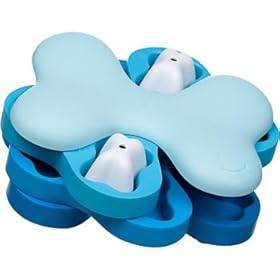
Dog Tornado: This toy has a higher difficulty rating than the Dog Brick and it is definitly more challenging. What is fun about this toy is that you can potentially put your dog's entire meal (especially for small dogs) in the Tornado thereby slowing down their eating and preventing gulping their food. Again, these toys require your supervision because there are small parts. Here is a video of my female akita, who is a little more sophisticated at solving puzzles, using the Tornado at a more advanced setting to make it more difficult to have access to the treats:
Cat Training and Toys And some of these toys are not limited to use for dogs. Even cats can get in on the fun. Here is my cat using the Dog Tornado as a way to keep her occupied and to prevent her from gulping down food too fast.
You can even train your cat to dog the same tricks as your dog!
For more videos on training you can go to my YouTube channel.
Take advantage of this time at home to bond with your pet and most of all, stay safe everyone!
The Myth: Many people ask me about whether it is a no-no to let your dog sleep on the couch or bed. Often you hear the absolute rule that you should never let dogs sleep on your bed or other high place because it will make them feel "dominant "over you. The Reality - There are many dogs who can sleep on a bed or sofa and never show aggression towards their owners or show any other behavioral problems. The act of letting your dog sleep on the bed does not mean your dog will begin to "dominate" your or that you will lose "alpha" status. Many of these ideas of dominance and being the alpha are questionable and it is more important to focus on the dog's behavior, your lifestyle and what you want in the long-term. See my article discussing the misconceptions of dominance in dogs.
My general rule of thumb is that pets on furniture is a personal choice if your dog is not showing aggression in this context. If your dog willingly jumps off the furniture when asked without growling or showing aggression, then it is generally not a problem. However, there are other considerations that you should take into account before giving your dog unlimited access to your sleeping areas.
I personally choose not to have any animals on my bed because 1) my large dogs take up too much space and 2) they are major shedders and I don't like having animal fur on pillows and areas where I sleep. My 12 year old shiba has sofa (but not bed) privileges as you can see in the photo above. However, she is still crate-trained and spends some time in a crate for meals and when I am training my other animals. In my case, it is a personal choice not to have some of my dogs on the sofa, but if people like having their dogs on the sofa or bed that is fine with the following caveats.
If you have a dog that is possessive or guards space, like sleeping areas, I would not give him/her unlimited sofa or bed privileges until the aggressive behavior is first dealt with. If your dog growls at you when you try to move him or when you get too close to her when she is sleeping then letting them sleep on a sofa or bed is not the best option. In such cases, it would be better to give the dog his/her own bed somewhere else and hire a positive reinforcement-based trainer to help you work through the aggressive behavior first before allowing unlimited access to your sofa or bed.
For puppies and newly adopted dogs, I recommend that you do not immediately give bed or sofa privileges until you have spent some time with your dog and get to know him/her better. I usually give it about 4-6 months for adults and a year for puppies. During this period you have worked through the destructive chewing phase, completed some basic training/manners training and you have determined whether there are any aggression issues or other behavioral issues such as separation anxiety that may impact where your dog should sleep.
After this period you can decide whether you really want to want a dog in your bed or on your sofa. For example, you may find out that your child has allergies, you plan on having a baby who will spend time in bed with you or you may realize after being with your dog that the fur on the bed is not your cup of tea. It is easier to give privileges than take them away. If you have been sleeping with a puppy in a bed from the age of 8 weeks, it is going to be much harder 8-10 months later to then try to train the puppy to sleep on the floor or in a crate. So when you decide where you want your dog to sleep, ask yourself if this is going to be o.k. with you in the long term with all the lifestyle changes your family will be going through during your dog's lifetime.
There are many notions in the dog training world that are out-dated, based on outmoded dog training philosophies or are simply not based on what we currently know and understand about domestic canine behavior. This month I want to explore some of the "rules" that involve taking your dog for a walk:
1) Myth - If your dog exits the doorway ahead of you, he/she is being dominant.
The Reality - This idea started with the notion that the alpha wolves led the pack and if you wanted to be a "pack leader" you need to walk ahead of your dog. The alpha dog concept has been questioned in recent years as scholars have argued that the old studies on captive wolves do not reflect what goes on in wild populations. Moreover, dog social structures seem to be more fluid and less hierarchical than wolf populations. For a more detailed explanation and list scientific sources, read my article on the alpha dog theory. The simple explanation for dogs wanting to run out the door is that what is outside is much more interesting than what they see inside the house day after day. Walks are really rewarding for dogs, mentally and physcially, so it is no surprise that they want to run out the door.
The main reason to train a dog to wait behind a door before you release them for the walk is for safety not to show your "dominance" over the dog. You don't want a dog make a habit of charging out of a door, especially if the leash has not been securely fastened. Because going for a walk is what I call a "life reward," I use this fact to my advantage and ask the dog to perform a behavior such as a "sit" or "wait" before I open the door and let them outside. By doing this, I reinforce their training (sit and wait) and the great thing is that the reward is not food, but the walk itself.
2) Myth - A dog that walks ahead of you on a walk is being dominant.
The Reality - again, this notion has its roots in dominance or alpha dog theories and like the doorway myth, the studies do not support this idea. I think the simplest explanation as to why dogs like to forge ahead on walks is because they usually can walk faster than us and what is in front of us is much more interesting. It is not so much about controlling you as it is excitement and trying to burn off some mental and physical energy. Walks are very exciting for dogs and are often the highlight of a dog's day. I advocate the notion of walking with a loose leash which is comfortable for both the dog and owner. A dog that is pulling you with a taut leash or a dog that zig zags is simply an untrained dog.
If you have a leash aggressive dog, however, you may want to train your dog to walk closer to you because giving an aggressive dog too much space ahead of you makes it harder for you to control and work with your dog if he/she becomes reactive when he/she sees another dog or person. Again, keeping a dog closer to you in this scenario is more for safety and training purposes rather than rooted in notions of your dog trying to dominate you.
3) Myth - Your dog should not be allowed sniff the ground on walks.
The Reality - this one makes me sad and I am not sure how this idea got started. It causes owners (and the dog) a lot of undue stress and owners often end up jerking the dog around in frustration. The highlight of a dog's day is to be able to smell the "calling card" left by other dogs and leave one himself/herself. A dog's sense of smell is so sharp compared to ours that there is a lot of information picked up by smelling the ground. It is also good mental stimulation as your dog is processing information about the neighborhood. When dogs are young puppies, I feel that smelling the world is vitally important for their development and learning not to fear the world outside the home. Jerking on a puppy's collar every time he/she tried to investigate the world is very stressful and makes a walk unpleasant for the dog.
In a casual walk, I allow my dogs to smells things and they manage to keep walking with me in a straight line and on a loose lead. Akitas and shibas were bred for hunting and I am not going to deny them the pleasure of smelling things. Moreover, my dogs do not need to look up at me adoringly for our entire 45 minute walk. I am not training them for competitive obedience and neither are 99% of average dog owners. If my dog lingers too long at a spot or if we need to keep moving, I have a verbal cue "let's go" and she knows that we need to move on. If I need to her to go to a heel position and focus on staying close to me I have a verbal cue "heel." But, the bulk of my walks are leisurely, loose leash walks and keeping a strict heel for the entire walk is not necessary. My view is that when I attach a leash to my dog, the walk around the neighborhood is for her pleasure just as much as mine. Would you go on a hike without admiring the scenery? Well, going on a walk without being able to smell things would be the equivalent deprivation for a dog.
Now if your dog is zig zagging back and forth or pulling you around to smell something, that is an issue of training your dog to walk in a straight line without pulling. This is a separate issue from letting your dog smell things once in awhile on a walk.
So, next time you go for a walk, enjoy the sights and sounds. Stop and smell the roses (or in the case of your dog, the hydrant).
I have recently been working with a parrot and working with
different species often gives me insights on how certain challenges are common
to many species that are domesticated or in the case of parrots semi-domesticated. Our pets can become easily bored which in turn can lead to destructive behaviors.
With domesticated animals, we simply put their food in a bowl and walk away. The result is that our pet's meal is over anywhere from a few seconds to a few minutes. The hours an animal may spend foraging for food is now taken away.This means that our pets now have a lot of
free time.So how can we engage our pets mentally and have them work a little harder for their meal? Here are a few suggestions:
Training Games
I play short training games as a way for my dogs to work for their meals. It has the added benefit of bonding with your pet and working with your pet in a cooperative manner. Instead of using treats, I take half their kibble and reward them for doing some simple behaviors or fun hide and seek games. I also like to practice recall exercises (calling your dog to you). This engages them mentally, they work for their meal and you reinforce some of the training that you previously taught them. Then when I am done with my quickie training session which usually only lasts for a 2-3 minutes, I give them the remainder of their kibble in a Kong or other toy. This way, they do not get so many treats during the day and if you have a pet that has a tendency to put on weight, you use their kibble in lieu of the treats. Save the tasty treats for more distracting settings like out on a walk or outside of the house.
Hide the Kongs
One way to mimic foraging activities is stuff a few Kongs with your dog's breakfast kibble and a few treats inside the Kong and hide the Kongs in various parts of the house/yard before you. leave for work. Your dog can spend part of is her time while you are away. So instead of putting your dog's meal in a bowl, your dog has to hunt for the meal and try to excavate the contents of the Kong. This is also a good way to slow down fast eaters. For younger dogs, make sure they know how to use the Kong and are proficient at excavating the contents before attempting to hide them and using the Kong in liue of a dinner bowl. The same concept would apply to cats using a smaller Kong and using just dry cat food.
Puzzles for Mental Stimulation
Fortunately, there are many
products in the market that encourage foraging and in doing so, stimulate our
pets mentally.So now a meal that would
take a minute or two to devour may take as long as 10-30 minutes to complete
depending on how challenging the toy is. Here is a picture of a foraging toy for the parrot I am
working with.The bird has to manipulate
the slotted ball to gain access to the treats inside the ball with her beak.
For dogs, there are many, many products to choose from. Some of the toys roll around which has the added benefit of providing exercise as well as mental stimulation. I have written in detail about interactive toys past articles, but I will highlight a few examples here.
The Premier Busy Buddy line of dog toys has a number of foraging toys that the dog has to manipulate in order to get at the food. For younger puppies, I recommend the Twist-and-Treat or the Kibble Nibble. For older dogs the Magic Mushroom or Tug-a-Jug. I have used the small size Twist and Treat with my cat using her kibble.
Here is a video of one of my dogs using the Tug-a-Jug which is one of the more difficult toys and recommended for dogs over 6 months due to its difficulty.
Another line of toys which require more of your interaction and supervision are the Nina Ottosson line of puzzle toys. You hide the treats in compartments and your dog has to figure out how to get the food out. Here are a few examples:
Here is a video demonstration of the Dog Tornado:
Cats Need to Forage Too!
The same principles apply to cats.My cat is easily bored and
playing training games and creating foraging opportunities helps curb her tendencies to
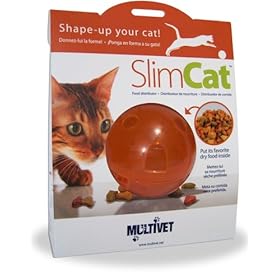
try to “hunt” for food in my kitchen.Cats can access the highest of shelves so managing such behavior can be quite challenging. One of her favorite toys is the Slim Cat Food Dispenser. The ball rolls around the room much like the Kibble Nibble which helps to provide your cat with exercise. Some of the smaller sized Premier toys above can also be used for cats. I used the Twist and Treat for my cat and she spent an hour trying to get the kibble out.
The Nina Ottosson toys are also excellent for cats and since cats are not big chewers, they can be safely left with them whereas dogs need to be supervised with this type of toy. Here is a video of my cat solving the Dog Tornado:
For more videos and examples of interactive toys click here.
So get creative and find ways to minimize the use of the food bowl!
A few weeks ago I attended the APDT conference in San Diego as part of my continuing education and to maintain my certification. It is important for dog trainers keep up with current trends in dog training and to do continuing education of some form. Attending conferences is also a good way to meet others in our field.
One of the big highlights of the conference (at least for me) was Terry Ryan's (Legacy Canine) Click-A-Chick workshop. This 3 hour workshop involved the art and science of clicker training chickens. You may be asking yourself, "but, you are a dog trainer, why clicker train chickens?" There are many reasons why this workshop is such a big hit amongst dog trainers:
1) Chickens have fast, twitchy movements and it hones the hand-eye coordination needed for effective clicker training as well as help you to become very precise with the timing of your click.
2) Chickens don't wear collars and leashes so it forces you to train an animal using a more "hands-off" approach. Many people who train dogs fall back on popping the leash and other methods of physically "correcting" the dog. When you train other species like birds or cats, you quickly learn that physically correcting or prompting an animal is really not necessary to teach a new behavior (see my cat video below).
3) Chickens will walk or fly away if you do not keep them engaged. So, you have to be on your toes and observant to make sure they are being reinforced for desired behaviors.
4) Training a different species with different mannerisms and body language from canines can help develop your observational skills.
Me and the chicks hanging out before the workshop
Here is a video clip from the workshop demonstrating target training (similar to what we do in class with our hands as the target) and the learning theory concepts of extinction and extinction bursts (I don't know why I am talking to the chicken, probably a habit from training dogs). As you watch the video, think about how some of these concepts apply to dog training:
Here is a clip demonstrating the amazing things you can teach chickens to do (this is from a longer chicken training camp/workshop):
This was an extremely fun workshop and it gave me an appreciation for how different it can be to train non-canine (in this case avian) species. The scientific and learning principles are the same but each species is a little different in how fast they move, their motivators, their level of intelligence and perception and how precise you have to be with timing and reinforcements. Puppies seem to move in slow motion compared to the chickens.
Here is a clip of some of the tricks my cat learned through clicker training. Like the chicken, there is no leash and everything is hands-off. She is learning some of the same skills that I teach in the basic class. More videos to come in the near future:
So if you want to learn more about the science of animal learning and why these methods are effective, here are a few good resources
Boredom and lack of excercise can lead to destructive behavior. In addition to exercise, mental stimulation can help alleviate boredom. There are a number of toys on the market that can keep your dog occupied and enrich your dog's environment. This month, my dogs (and cat) have assisted me in test driving many of the more popular toys on the market.
Interactive toys can be grouped into two categories: toys that involve self-play (dog interacts with toy) and toys that involve your participation. Below is a summary of the various toys on the market, my review of the pros and cons of each and my dogs' response to these toys. The "Mitsu-Meter" (in honor of my crazy Shiba Inu, Mitsu) is a separate rating based primarily on my dogs' reaction to the toy (0 to 5 paws). A higher paw rating is a reflection of the level of interest and enthusiasm my dogs showed towards the toy. If my dogs abandoned the toy before the treats ran out or showed too much frustration, the toy received a lower rating.
With toys, it is always good to have a few different types of toys handy for variety. Rotate the toys through a 2-3 day cycle so they do not get bored too easily.
Unsupervised Play
Some toys can be used when the dog is left alone or for times when you need to keep your dog occupied (e.g. when you have guests over, you are busy at the computer, when you are having a meal). These toys must be fairly indestructible and have no small parts.
Kongs - Kongs are great toys that can be stuffed with your dog's kibble, treats, and other foods. Your dog will spend a lot of time trying to get the contents out of the Kong. Think of it like a doggie pacifier. For heavy chewers the Extreme Kong (black version)would be a better choice. The Kong website has instructions on how to use it with recipes and I also posted a blog about the many uses of Kongs which you can read about here.
Pros: quiet, hard to destroy, also a chew toy, most dogs like them when they are stuffed. Has the potential to keep your dog occupied for up to an hour or more. For novices, just put a few pieces of kibble inside until they get the idea. As your dog becomes more sophisticated, you can stuff the Kong with a mixture of soft and hard treats. Can also be used as a fetch toy or to slow down fast eaters (see my previous blog). Dishwasher safe.
Cons: Can be hard to clean inside. Need to use a dishwasher or bottle brush.
Mitsu-Meter: 5 paws. Never seemed to get bored of them.
Tug-A-Jug - This toy, made by Premier Pet Products, requires the dog to manipulate the jug and rope to try to get the treats out. If you use smaller treats, it is easier for the dog to get the treats. If the rope is destroyed, you can place balls in the jug for continued play. The other nice thing about this toy is that the jug is see-through so the dogs can see the treats inside.
Here are some videos showing my dogs using the Tug-A-Jug and their different styles of trying to get the treat:
Here is Mitsu, who has a very boisterous trial-and-error approach to problem solving. She is a very intense little dog who is very food motivated.
This is my two year old Akita, Kiku, who takes a little more patient and systematic approach to problem solving:
Pros: You can use dry food which is a little less messy than the Kong. Dogs can see the food in the jug. Fairly durable.
Cons: Can get noisy if used indoors (see video). May not be durable for very strong chewers but so far it has withstood my akita's jaws.
Mitsu-Meter: 5 paws. Dogs were very motivated by this toy as you can see from the video. Being able to see the kibble in the jug was very motivating. My Akita enjoyed it more because she was able to figure out a strategy to get the kibble out.
Twist and Treat - Another similar rubber toy called the Twist and Treat is made by Premier. Some of my clients have used this toy and I have seen it in action. This toy is probably better for smaller dogs and less powerful chewers. This toy has the advantage of being adjustable depending on the size threat you are using. This is one of my favorite toys to use for puppies or dogs that are not used to interactive toys.
Squirrel Dudeand Waggle: The Squirrel Dude and Waggle are similar to a Kong in durability and use except there are rubber prongs (see illustration below) at the entrance which make it harder for the treats to fall out. You can use kibble and dry treats with this toy whereas the Kong can be used with moist treats. The smaller the kibble/treat, the easier it is for the treats to be shaken out of the toy. If it is too hard for your dog you can cut some of the prongs to make it easier for the kibble to fall out. Like the Kong, this set of Busy Buddy rubber toys make for quieter playtime.
Pros: quiet, durable, also a chew toy, can be used as a fetch toy, dishwasher safe.
Cons: Need to experiment to find the right size kibble to make sure it is not difficult or too easy or cut one or more of the rubber prongs if too difficult. Hard to get old kibble out because of prongs.
Mitsu-meter: 3.5 paws. My dogs did not show the same level of interest as compared to the Tug-A-Jug or Kibble Nibble (below). My female Akita played with it the longest and ended up carrying it around. My Shiba Inu lost interest when she could not get all the treats out. She did not quite figure out how this toy differed from a Kong. You may need to cut some of the prongs or use smaller treats to make sure the reward interval is sufficient enough to keep up interest.
Buster Cube - The Buster Cube has been on the market a long time. This was one of the original toys I used with my 10 year old Shiba Inu when she was a puppy. Like the Squirrel Dude, the buster cube dispenses dry treats randomly when the dog moves the toy around. You can also adjust the level of difficulty depending on the skills of your dog.
Pros: you can adjust the difficulty level. Fairly durable. Can use kibble which is cleaner.
Cons: noisy, hard to find in stores nowadays but can easily be ordered online. May need supervision for powerful chewers.
Mitus-meter: 4 paws. My dogs do not tire of this toy. But they are much more enthusiastic with the Tug-A-Jug and Kibble Nibble where they can actually see the kibble.
Pros: Bone and ball part are made of tough material(subject to the caveat below).
Cons: Must use premier treats to refill bone. Smart dogs learn to unscrew the bone and can damage the toy (see comment below).
Mitsu-Meter: 2 paws. My female akita learned to unscrew the bone to get at the treat within 10 minutes. Despite my attempt to screw the bone on tighter, she was able to unscrew the bone again in a shorter amount of time. Within the few minutes she unscrewed the bone the second time she chewed the threads making the toy unuseable. This toy may be better for smaller dogs that do not have strong jaws to unscrew the toy and supervision is definitely required.
Kibble Nibble: This is another Premier toy that is similar to the Buster Cube except that the ball is see-through and the dog can see how much kibble is left. It takes some experimentation to determine what size kibble/treat works best so that it is not too easy or too hard.
Here is my Shiba Inu, Mitsu, playing with the ball. She is almost 11 years old now and she is going after the ball with gusto. This video is not sped up, this old gal is actually this frenetic. She ended up playing with this ball for about 15 minutes, did a couple of shiba yells at the ball, got a drink of water and came back for another 10 minutes before I took it away from her. During the video you can see a treat flying out of the ball:
Pros: the egg-shell shape makes it easy for the dog to roll the toy around. The toy is see-through which is very motivating. Can use dry treats so is less messy.
Cons: noisy (see video above), need to experiment to see what size treat works best. I found that for the large Kibble Nibble my own dogs' kibble and the large size liver biscotti treats made by premier worked well. If I found my dogs getting frustrated, I would mix in smaller treats to shorten the reward interval. The plastic edging surrounding the ball can be chewed off so supervision is needed.
Mitsu-Meter: 5 paws. My dogs really enjoyed this toy. Being able to see the treats inside seems to be key with my dogs. They will continue rolling the ball until the last treat is gone.
For cat lovers out there, there is even a cat version. Here is the Slim Cat interactive feeder designed to make your cat work for her food. I have used this feeder for my cat and it helps her burn off some of her energy and give her something fun to do.
.
There are many, many other versions of food dispensers on the market. These are but a few of the ones that are most commonly available. Premier pet toys and Kongs can be found at most pet stores. When buying toys, make sure that they are durable, do not have too many small parts and are easy to clean and reuse.
Caveat: For people who live in multi-dog households, please give these toys to dogs separately or let them play with their own toys in different areas. These toys can make dogs possessive and fights can occur so exercise caution.
Toys Requiring Owner's Participation
This category of toys are toys that involve the participation of the owner. Examples of traditional toys requiring owner participation are balls, fetch toys, tug of war toys and frisbees. There are also toys that involve problem solving skills. Nina Ottoson has created a whole line of toys which help hone your dog's problem-solving skills and at the same time help develop the bond with your dog. I sampled two toys, the Brick and the Tornado. These toys require human supervision and they must not be left alone with your dog.
The Dog Brick - this toy requires the dog to remove the bricks and slide the covers to get to the treats. The link provided contains an instructional video on how to use this toy. Below is a video I made showing how my dog solved the brick. FOR GRADUATES OF MY CLASSES: use this opportunity to ask your dog to "sit" and "wait"/"stay" while you assemble the toy and then the command "find it" to find the hidden treats.
Pros: Really fun to watch your dog become more proficient at solving the problem. The plastic parts are easy to clean. Good way to bond with your dog. Nice way to quietly play with your dog rather than roughhousing.
Cons: This puzzle may be too easy for some dogs. My Shiba Inu and female Akita figured the toy out fairly quickly. My male akita is still figuring it out. Requires supervision because of small and moving parts.
Mitsu-Meter: 5 paws. Even though my dogs seemed to have figured out this puzzle fairly quickly, they do not get tired of using it.
Dog Tornado: This toy has a higher difficulty rating than the Dog Brick and it is definitly more challenging. What is fun about this toy is that you can potentially put your dog's entire meal (especially for small dogs) in the Tornado thereby slowing down their eating and preventing gulping their food. Again, these toys require your supervision because there are small parts.
Here is a video of my senior male Akita using the dog tornado for the first time and the puzzle is set at an easy setting:
Here is a video of my female akita, who is a little more sophisticated at solving puzzles, using the Tornado at a more advanced setting to make it more difficult to have access to the treats:
And some of these toys are not limited to use for dogs. Even cats can get in on the fun. Here is my cat using the Dog Tornado as a way to keep her occupied and to prevent her from gulping down food too fast.
Pros: Same pros as the Dog Brick. I like this puzzle a little more because it is more difficult and you can use it to feed your pet his/her meal.
Cons: Requires supervision because of small and moving parts.
Mitsu-Meter: 5 paws. Even my shy, reticent male Akita got into this toy.
There are other versions of the Nina Ottoson toys at varying levels of difficulty. The toys I sampled were rated at medium (Dog Brick) and high (Dog Tornado). These toys are available at Amazon and The Company of Animals http://www.companyofanimals.us/index.php.
Which interactive toys are your dog's favorite? Share your experiences below.
• Dog A is a 1.5 year old female
• Dog B is a 10 year old female
• Dog C is a 12 year old male
Each of the dogs exhibits the following behaviors.
Dog B – claims the sofa and that is where she sleeps. The other dogs never disturb her nor do they ever try to take her spot. She sometimes sleeps in the bedroom. Dog B usually sleeps at a higher elevation from the other dogs.
Dog C – claims the bedroom where the owner sleeps almost every night. Dog B will also sleep in the bedroom on occasion.
Dog A - sleeps in the kitchen most nights but will sometimes sleep in the bedroom if Dog C or Dog B do not get there first.
Dog A – usually tries to muscle her way out of doorways and hallways first. However, none of the dogs will attempt to walk over or around another dog if a dog is blocking a hallway or doorway.
Dog A will claim the chew toys such as deer antlers and nylabones. Sometimes Dog C will take it from her and successfully keep it away from Dog A. Dog B will not steal chew toys from Dog A. Dog A will take chew toys from Dog B.
Dog B can stare down Dog C, until he drops whatever food he has in his mouth. She will then take the food that was in his mouth.
Dog A will try to take toys from Dog B. Dog B will drop toys and allow Dog A to have them.
Dog A is the most likely to initiate physical skirmishes, Dog B rarely initiates physical fights. Dog C never initiates fights.
Dog B receives the most face-licking from the other dogs, followed by Dog A. Dog C initiates most face-licking and even licks the cat’s face. Dog B rarely licks the faces of the other dogs.
All dogs initiate play with each other. Dog A initiates the most rounds of play followed by Dog C.
Which dog do you think is the “alpha”?
~~~~~~~~~~~~~~~~~~~~~~~~~~~~~~~~~~~~~~~~~~~~~~
The scenario above depicts the real-life group dynamics of my three dogs. Dog A is my 70 pound female Akita, Dog B is my 25 pound female Shiba Inu and Dog C is my 90 pound male Akita. Does knowing these size differences change your analysis of the scenario? Does it surprise you that a 25 pound shiba can stare down an 90 pound male Akita to the point where he will drop the food already in his mouth?
Dominance in the animal behavior world is typically defined as a relationship between individual animals to determine who has priority access to resources such as food, preferred resting spots, and mates. So the term applies to the dynamics between two animals rather than an attribute or trait of a single animal. And, these mostly ritualized interactions determine access to resources whether it be food, space or even proximity to the owner. Often, the relationship between two animals can vary depending on context and degree of motivation as seen in the scenario above. For example, a younger dog may be more motivated to possess toys than a senior dog. Moreover relationships between the dogs in the same household can sometimes be quite complex as context, age, size and gender can factor into how dogs interact with each other.
So where did all this alpha stuff come from?
The alpha dog concept has its roots in early captive wolf studies. These studies focused on the interactions of unrelated, captive wolf packs. From these studies developed the notion that since dogs were descended from wolves and that wolves had an alpha-male and alpha-female pack leaders, domesticated dogs operated the same way. Based on this theory of canine social dynamics developed training techniques such as the “alpha-roll,” pinning the dog on the ground, and scruff-shaking, which were supposed to mimic what a dominant wolf did to a subordinate wolf. Other notions such as walking ahead of your dog through doorways, not letting your dog on the bed and eating before your dog can be traced to early perceptions of how wolf packs operated. Recent studies have shown that the basis for adopting such practices is flawed and physical corrections such as scruff shaking and alpha rolls can have detrimental effects. See my previous post regarding the risks of punishment for reactive dogs.
Canid researchers have debunked the alpha theory on several grounds. First, David Mech, a respected authority of wolf behavior, noted that the term “alpha” is outdated. Mech points out that the terminology is based on older studies of captive wolf populations. More recent studies have shown that wild wolf populations consist of family units with the parents acting as the breeding pair. (1) Thus, the “alpha pair” being the parents and the “subordinates” are the offspring.
Moreover, studies of feral dog populations suggest that dog pack dynamics are fluid and less rigid than wild wolf populations.(2) Scientists believe that dogs have been domesticated as long as 12,000 to 14,000 years based on fossil evidence(3) and perhaps as long as 100,000 years based on genetic comparisons between wolves and dogs.(4) Given that mammalian social structures can be strongly affected by the external environment, it is not surprising that the social dynamics of dogs have diverged from their wolf ancestors. Living with humans has had a profound influence on the evolution of canine social systems. Canine expert Raymond Coppinger theorizes that early dogs adapted to a scavenging lifestyle by living off the food scraps and waste left near human settlements. (5) The evolutionary pressure to be a large, highly organized group hunter became less significant and the two species diverged into two separate niches. The AVSAB position statement highlights other aspects of dominance theory which are not supported by observations of canine or wolf social dynamics. See AVSAB Statement.
For these reasons, characterizing an individual dog as an “alpha dog” is not scientifically accurate nor is it very productive. For example, in situations where dogs are fighting in a household, there is a line of thought that the owner should support the “alpha or “dominant” dog. However, in a multi-dog household, relationships between dogs are not always a simple, linear hierarchy. Such approaches can result in a misinterpretation of who is the dominant dog and inadvertently reward inappropriate behavior. For example, in the scenario above, supporting Dog A during skirmishes could easily result in an adolescent dog being rewarded for her bullying behavior which could translate to other undesirable behaviors outside of the home.
Therefore, when dealing with inter-dog dynamics within a household, caution should be exercised and owners should consult professional trainers who are well-versed in animal learning theory and behavior modification techniques relying mainly on reward-based approaches to animal training.
1) Mech, L.D. 2008. What every happened to the term alpha wolf? International Wolf.
(http://www.wolf.org/wolves/news/iwmag/2008/winter/winter2008.asp).
2) Van Kerkhove, Wendy , A Fresh Look at the Wolf-Pack Theory of Companion-Animal Dog Social Behavior, JOURNAL OF APPLIED ANIMAL WELFARE SCIENCE, Volume 7, Issue 4 January 2004 , pages 279 – 285.
3) Lindsay, Steven, Applied Dog Behavior and Training, Volume 1, pgs. 4-5, Blackwell Publishing (2000).
4) Vila, Carles, Savolainen, Peter, Maldonado, Jesus E., Amorim, Isabel, Multiple and Ancient Origins of the Domestic Dog, SCIENCE, Vol. 276, No. 5319: 1687-1689 (13 June 1997).
5) Coppinger, Raymond and Coppiner, Lorna, Dogs: A New Understanding of Canine Origin, Behavior and Evolution. University of Chicago Press (2001) pgs. 58-67.




 .
. 