Showing posts with label interactive dog toys. Show all posts

Sunday, April 5, 2020

Sheltering in Place with your pet - keeping you and your pet engaged during the Coronavirus epidemic


During this pandemic sheltering in our homes has become a way of life. Being cooped up in the house can be challenging for both you and your pet.
Fear not, this just changes the activities that you and your pet can engage in.  Here are some examples:

Walking your dog - in cities where it is permitted, you can keep up with your daily neighborhood walks.* Don't forget to wear your face mask and maintain at least 6 feet for social distancing. If you are unsure, consult with your mayor's or governor's websites regarding local guidelines for sheltering in place during this pandemic to make sure walking in your neighborhood is permitted. 

*If you are a senior citizen or in an "at-risk" or "vulnerable" group, please make sure you follow your doctor's orders and/or city or state's guidelines regarding staying at home.  Walking in the neighborhood may not be an option for you if you are at-risk.  

Training – why not use this time in the house to reinforce some of your dog’s training? Put together a series of behaviors for your dog to perform and reward your dog for the last behavior in the chain. Go to your spot, lie down and stay is an example of a training combination. Or teach your dog a new trick. YouTube and other websites have videos of how to teach your dog to do simple tricks.  Just remember to change the order and combinations of your tricks so your dog does not begin to memorize the order or sequence of tricks.

My YouTube Channel has some videos you can refer to for training dogs, cats and even birds.

Hide and Seek – playing hide and seek games where your dog has to find you in different parts of the house is a great way to reinforce your dog’s recall (coming to you).  When training a dog to come when called, always remember that when they find you to reward them with effusive praise, petting and/or treats. Teach them that finding you is a big party.

Toys
Some toys can be used when the dog is left alone or for times when you need to keep your dog occupied (e.g.when you are on a call, you are busy at the computer, when you are having a meal). These toys must be fairly indestructible and have no small parts. Most people have Kong toys but there are many others you can order online or obtain from most pet stores.

Kongs (http://www.kongcompany.com) are great toys that can be stuffed with your dog's kibble, treats, and other foods. Your dog will spend a lot of time trying to get the contents out of the Kong. Think of it like a doggie pacifier. For heavy chewers the Extreme Kong (black version)would be a better choice. The Kong website has instructions on how to use it with recipes and I also posted a blog about the many uses of Kongs which you can read about here.

One of my favorite ways to use a Kong is to hide one or more Kongs around the house (I like to use places other than the kitchen or dining room) and ask your dog to find it. My dogs have been taught that the word “find it” means go hunt for the object. An empty Kong makes a great fetch toy as well.


Tug a Jug - This toy, made by Petsafe Pet Products, requires the dog to manipulate the jug and rope to try to get the treats out. If you use smaller treats, it is easier for the dog to get the treats. If the rope is destroyed, you can place balls in the jug for continued play. The other nice thing about this toy is that the jug is see-through so the dogs can see the treats inside. This toy has a high difficulty rating in my book so it may be too difficult for inexperienced dogs like puppies.
Here is a video of my two year old Akita, Kiku, who takes a patient and systematic approach to problem solving:


Twist and Treat – this is another similar rubber toy called the Twist and Treat is made by PetSafe. This toy is probably better for smaller dogs and less powerful chewers. This toy has the advantage of being adjustable depending on the size threat you are using so I find it easier for most dogs.


Buster Cube -  The Buster Cube has been on the market a long time. This was one of the original toys I used with my 10 year old Shiba Inu when she was a puppy. The Buster Cube dispenses dry treats randomly when the dog moves the toy around. You can also adjust the level of difficulty depending on the skills of your dog.


Kibble Nibble: This is another Premier toy similar to the Buster Cube. The object of the game is to roll the ball around to make the kibble come out.The ball is see-through and the dog can see how much kibble is left. It takes some experimentation to determine what size kibble/treat works best so that it is not too easy or too hard.

Here is video of my Shiba Inu, Mitsu, playing with the ball. She is almost 11 years old now and she is going after the ball with gusto. This video is not sped up, this old gal is actually this frenetic. She ended up playing with this ball for about 15 minutes, did a couple of shiba yells at the ball, got a drink of water and came back for another 10 minutes before I took it away from her. During the video you can see a treat flying out of the ball:


Toys Requiring Owner's Participation


This category of toys are toys that involve the participation and supervision of the owner. Examples of traditional toys requiring owner participation are balls, fetch toys, tug of war toys and frisbees. There are also toys that involve problem solving skills. Nina Ottoson has created a whole line of toys which help hone your dog's problem-solving skills and at the same time help develop the bond with your dog. These toys require human supervision and they must not be left alone with your dog because of the moving parts and materials that can be chewed up into small pieces if unsupervised.

The Dog Brick - this toy requires the dog to remove the bricks and slide the covers to get to the treats. The link provided contains an instructional video on how to use this toy. Below is a video I made showing how my dog solved the brick.


Dog Tornado: This toy has a higher difficulty rating than the Dog Brick and it is definitly more challenging. What is fun about this toy is that you can potentially put your dog's entire meal (especially for small dogs) in the Tornado thereby slowing down their eating and preventing gulping their food. Again, these toys require your supervision because there are small parts.
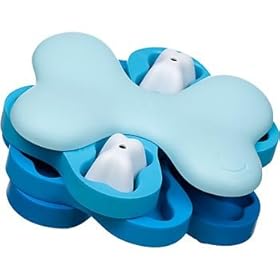


Here is a video of my female akita, who is a little more sophisticated at solving puzzles, using the Tornado at a more advanced setting to make it more difficult to have access to the treats:


Cat Training and Toys

And some of these toys are not limited to use for dogs. Even cats can get in on the fun. Here is my cat using the Dog Tornado as a way to keep her occupied and to prevent her from gulping down food too fast.  


You can even train your cat to dog the same tricks as your dog!


For more videos on training you can go to my YouTube channel.


Take advantage of this time at home to bond with your pet and most of all, stay safe everyone!

Monday, January 14, 2019

Foul Weather Friends

Now that the rainy season has officially started here in Southern California, you may find that you are holed up in your house with your pet because of inclement weather. Your dog may not be able to take his/her daily walks and whenever you look up you find a pair of big, sad eyes staring at you expectantly, anticipating every move that you make.

Fear not, being indoors just changes the activities that your pet can engage in. Rainy days are when I break out some of my favorite interactive dog toys and play some indoor games that reinforce my dog’s training. Here are some examples:

Training – why not use that time in the house to reinforce some of your dog’s training? Put together a series of behaviors for your dog to perform and reward your dog for the last behavior in the chain. Go to your spot, lie down and stay is an example of a training combination. Or teach your dog a new trick. YouTube and other websites have videos of how to teach your dog to do simple tricks.

Hide and Seek – playing hide and seek games where your dog has to find you in different parts of the house is a great way to reinforce your dog’s recall (coming to you).  When training a dog to come when called, always remember that when they find you to reward them with praise, petting and/or treats.  Teach them that finding you is a big party.

Toys
Some toys can be used when the dog is left alone or for times when you need to keep your dog occupied (e.g.when you have guests over, you are busy at the computer, when you are having a meal). These toys must be fairly indestructible and have no small parts. Most people have Kong toys but there are many others you can order online or obtain from most pet stores.

Kongs (http://www.kongcompany.com) are great toys that can be stuffed with your dog's kibble, treats, and other foods. Your dog will spend a lot of time trying to get the contents out of the Kong. Think of it like a doggie pacifier. For heavy chewers the Extreme Kong (black version)would be a better choice. The Kong website has instructions on how to use it with recipes and I also posted a blog about the many uses of Kongs which you can read about here.

One of my favorite ways to use a Kong is to hide one or more Kongs around the house (I like to use places other than the kitchen or dining room) and ask your dog to find it. My dogs have been taught that the word “find it” means go hunt for the object. An empty Kong makes a great fetch toy as well.


Tug a Jug - This toy, made by Petsafe Pet Products, requires the dog to manipulate the jug and rope to try to get the treats out. If you use smaller treats, it is easier for the dog to get the treats. If the rope is destroyed, you can place balls in the jug for continued play. The other nice thing about this toy is that the jug is see-through so the dogs can see the treats inside. This toy has a high difficulty rating in my book so it may be too difficult for inexperienced dogs like puppies.
Here is a video of my two year old Akita, Kiku, who takes a patient and systematic approach to problem solving:


Twist and Treat – this is another similar rubber toy called the Twist and Treat is made by PetSafe. This toy is probably better for smaller dogs and less powerful chewers. This toy has the advantage of being adjustable depending on the size threat you are using so I find it easier for most dogs.


Buster Cube -  The Buster Cube has been on the market a long time. This was one of the original toys I used with my 10 year old Shiba Inu when she was a puppy. The Buster Cube dispenses dry treats randomly when the dog moves the toy around. You can also adjust the level of difficulty depending on the skills of your dog.


Kibble Nibble: This is another Premier toy similar to the Buster Cube. The object of the game is to roll the ball around to make the kibble come out.The ball is see-through and the dog can see how much kibble is left. It takes some experimentation to determine what size kibble/treat works best so that it is not too easy or too hard.


Here is video of my Shiba Inu, Mitsu, playing with the ball. She is almost 11 years old now and she is going after the ball with gusto. This video is not sped up, this old gal is actually this frenetic. She ended up playing with this ball for about 15 minutes, did a couple of shiba yells at the ball, got a drink of water and came back for another 10 minutes before I took it away from her. During the video you can see a treat flying out of the ball:


Toys Requiring Owner's Participation

This category of toys are toys that involve the participation of the owner. Examples of traditional toys requiring owner participation are balls, fetch toys, tug of war toys and frisbees. There are also toys that involve problem solving skills. Nina Ottoson has created a whole line of toys which help hone your dog's problem-solving skills and at the same time help develop the bond with your dog. These toys require human supervision and they must not be left alone with your dog.

The Dog Brick - this toy requires the dog to remove the bricks and slide the covers to get to the treats. The link provided contains an instructional video on how to use this toy. Below is a video I made showing how my dog solved the brick.


Dog Tornado: This toy has a higher difficulty rating than the Dog Brick and it is definitly more challenging. What is fun about this toy is that you can potentially put your dog's entire meal (especially for small dogs) in the Tornado thereby slowing down their eating and preventing gulping their food. Again, these toys require your supervision because there are small parts.


Here is a video of my female akita, who is a little more sophisticated at solving puzzles, using the Tornado at a more advanced setting to make it more difficult to have access to the treats:


And some of these toys are not limited to use for dogs. Even cats can get in on the fun. Here is my cat using the Dog Tornado as a way to keep her occupied and to prevent her from gulping down food too fast.

Wednesday, December 17, 2014

Holiday Gifts Ideas for Pet Lovers

Do you need to give a gift for an animal lover?  Want to give something meaningful for the holidays?  Here are some ideas and suggestions:

Books

Here are some books that make nice gifts or are good holiday reading:

  • The Dog Whisperer Presents - Good Habits for Great Dogs: A Positive Approach to Solving Problems for Puppies and Dogs by Paul Owens.  This book covers positive approaches to solving problems for puppies and adult dogs.  It tackles modifying dog behavior from the perspective of changing habits.  This book also has a unique approach to dog training called “Take a Vacation from Canine Education.”  Those of you who have taken my classes might recognize this approach as a comprehensive version of the “Magnet Game” we play in class.  Not only is this approach easy to follow but it takes the stress and pressure out of dog training.  Small brag:  my Akita and Shiba Inu are in some of the pics.


  • Reaching the Animal Mind: Clicker Training and What It Teaches Us About All Animals.  This book explains why clicker training is such an effective training tool.  Karen Pryor is a former marine mammal trainer that popularized the use of clicker training with dogs.  Her book has many entertaining anecdotes that demonstrate the theories involved with training animals whether it be a dog, a dolphin or even a hermit crab!


  • The Science of Consequences: How They Affect Genes, Change the Brain, and Impact Our World.  Here is one that is on my reading list this holiday season.  Featuring illustrative human, pet, and wild-animal anecdotes, this book is a unique and fascinating introduction to a science that is truly epic in scope. Children quickly learn that actions have consequences. This elementary lesson is repeated again and again throughout adulthood as we adjust our behaviors according to the reactions they produce in the social and natural environment.


Donate to an Animal Rescue

During this time of year, animal rescues are in need.  Consider donating money or even your time to an animal rescue.  With the cold weather, many shelters and rescues need blankets and old towels to help keep the animals warm.  If you are no longer using your dog’s crate, x-pen or leash, consider donating it to a rescue.  Call first, to see if they have a need for your equipment.

Pet Portrait

There are many talented animal photographers in town who specialize in pet portraitures.  An animal lover would love to have a professional portrait of their pet as a keepsake.  A couple of people in town are:

http://www.pawprintspictures.com/about2.html - the photos on my website were taken by Erin Tomanek.

www.furryfotoes.com – I have used this company as well for pet portraits.


Gift Certificates

Many pet boutiques, pet stores, pet groomers and even certain dog trainers offer gift certificates you can give your friends. Recently, a client purchased some private training lessons for her mom to help with a newly adopted dog and another client purchased group lessons for her son and daughter-in-law.  These make great gifts for someone who has a new dog or a dog that needs a bit of training.


Gift Baskets

Many companies can make dog-themed gift baskets.  You can build a gift basket with dog treats and bowls or doggie toys.  Here are some fun ideas for interactive dog toys that they will be sure to love:

http://www.blog.pawsitivefeedback.com/2010/01/interactive-dog-and-cat-toys.html


Sunday, February 12, 2012

Tapping into Your Pet's Foraging Instinct

I have recently been working with a parrot and working with different species often gives me insights on how certain challenges are common to many species that are domesticated or in the case of parrots semi-domesticated. Our pets can become easily bored which in turn can lead to destructive behaviors.

With domesticated animals, we simply put their food in a bowl and walk away.  The result is that our pet's meal is over anywhere from a few seconds to a few minutes.  The hours an animal may spend foraging for food is now taken away.  This means that our pets now have a lot of free time.   So how can we engage our pets mentally and have them work a little harder for their meal?  Here are a few suggestions:
Training Games


I play short training games as a way for my dogs to work for their meals. It has the added benefit of bonding with your pet and working with your pet in a cooperative manner.  Instead of using treats, I take half their kibble and reward them for doing some simple behaviors or fun hide and seek games. I also like to practice recall exercises (calling your dog to you).  This engages them mentally, they work for their meal and you reinforce some of the training that you previously taught them. Then when I am done with my quickie training session which usually only lasts for a 2-3 minutes, I give them the remainder of their kibble in a Kong or other toy.  This way, they do not get so many treats during the day and if you have a pet that has a tendency to put on weight, you use their kibble in lieu of the treats.  Save the tasty treats for more distracting settings like out on a walk or outside of the house.
Hide the Kongs

One way to mimic foraging activities is stuff a few Kongs with your dog's breakfast kibble and a few treats inside the Kong and hide the Kongs in various parts of the house/yard before you. leave for work. Your dog can spend part of is her time while you are away.  So instead of putting your dog's meal in a bowl, your dog has to hunt for the meal and try to excavate the contents of the Kong.  This is also a good way to slow down fast eaters.  For younger dogs, make sure they know how to use the Kong and are proficient at excavating the contents before attempting to hide them and using the Kong in liue of a dinner bowl.  The same concept would apply to cats using a smaller Kong and using just dry cat food.


Puzzles for Mental Stimulation
Fortunately, there are many products in the market that encourage foraging and in doing so, stimulate our pets mentally.  So now a meal that would take a minute or two to devour may take as long as 10-30 minutes to complete depending on how challenging the toy is.
Here is a picture of a foraging toy for the parrot I am working with.  The bird has to manipulate the slotted ball to gain access to the treats inside the ball with her beak. 


For dogs, there are many, many products to choose from. Some of the toys roll around which has the added benefit of providing exercise as well as mental stimulation.  I have written in detail about interactive toys past articles, but I will highlight a few examples here.
The Premier Busy Buddy line of dog toys has a number of foraging toys that the dog has to manipulate in order to get at the food.  For younger puppies, I recommend the Twist-and-Treat or the Kibble Nibble.  For older dogs the Magic Mushroom or Tug-a-Jug.  I have used the small size Twist and Treat with my cat using her kibble.


Here is a video of one of my dogs using the Tug-a-Jug which is one of the more difficult toys and recommended for dogs over 6 months due to its difficulty.

Another line of toys which require more of your interaction and supervision are the Nina Ottosson line of puzzle toys.  You hide the treats in compartments and your dog has to figure out how to get the food out.  Here are a few examples:


Here is a video demonstration of the Dog Tornado:


Cats Need to Forage Too!

The same principles apply to cats.  My cat is easily bored and playing training games and creating foraging opportunities helps curb her tendencies to try to “hunt” for food in my kitchen.  Cats can access the highest of shelves so managing such behavior can be quite challenging.  One of her favorite toys is the Slim Cat Food Dispenser.  The ball rolls around the room much like the Kibble Nibble which helps to provide your cat with exercise.  Some of the smaller sized Premier toys above can also be used for cats.  I used the Twist and Treat for my cat and she spent an hour trying to get the kibble out.


The Nina Ottosson toys are also excellent for cats and since cats are not big chewers, they can be safely left with them whereas dogs need to be supervised with this type of toy.  Here is a video of my cat solving the Dog Tornado:


For more videos and examples of interactive toys click here.

So get creative and find ways to minimize the use of the food bowl!


Friday, May 7, 2010

The Vacuum Vigilante

Most dog trainers have several pet projects going on with their own dogs. My 11 year old shiba inu is what you would call a feisty gal. She is the most fearless dog I have ever met. At 6 months old she was part of the Nisei Week parade in Little Tokyo. While we were waiting our turn on the parade route, we were parked next to the Taiko drums. The Taiko drums went off and the other dogs were understandably frightened. Not Mitsu. She looked around as if she was thinking, “hey where’s the party at?” She has been to loud and frenetic places like Las Vegas strip and fireworks do not phase her.

However, she does have one little quirk that I have now made my “pet” project. It is her battles with the dreaded vacuum machine monster. She will attack the machine and will try to bite it and shake it. The loud noise, the lights, the annoying power cord, all of it sets her off. If the vacuum is in another room she does not pay attention. She is not afraid of the machine, she just does not want it in the living room where she hangs out. So how does one deal with the feisty vacuum machine vigilante?

Management: For years, I simply managed the situation. She went into her crate and she calmly waited for the chore to be over with. While in her crate she just fell asleep and did not bark at the vacuum. Sometimes, management is the simplest and easiest way to deal with non-fearful but mildly annoying behavior. However, as you will see in the video below, it did not change my dog's attitude towards the vacuum.

Redirection and Distraction: this year I decided to employ a different strategy; redirection and distraction. My dog has always loved her interactive dog toys so for the last two weeks she has been getting her Kong, Tug-A-Jug or Kibble Nibble when I vacuum. She has been getting these toys only when I vacuum which is very frequent right now because my dogs are blowing their coats. If you missed my review of interactive dog toys, go to: http://pawsitivefeedback.blogspot.com/2010/01/interactive-dog-and-cat-toys.html.

These toys not only distract my dog so I can complete my chores but it also has the effect of associating the vacuum with her fun, interactive toys. Here is a video of my dog before the introduction of her toys (about two weeks ago) and during the process of giving her toys when I need to vacuum the floor:


Note: my dog chose to be around the vacuum cleaner. In the case of the Kong, I kept putting it on her bed and in her crate while the vacuum was running but she preferred to work on it in the middle of the floor. Other dogs may prefer to work on these toys in a far corner, in their pen/crate or in a nearby room.

Teach Your Dog an Incompatible Behavior: another strategy is to teach your dog what you want her to do instead. Ideally, it should be a behavior that is incompatible with what she has been doing. Teaching your dog to go to her bed and stay is an example of a behavior that is incompatible with being on the floor and attacking the vacuum. I also started this training with Mitsu. Make sure your dog is solid with these behaviors before attempting it with a vacuum. In Mitsu's case she has a pretty solid command of "bed" and "stay." Here is an example of the beginnings of this type of training:


Dogs who are afraid of the vacuum: in this case, my dog is not afraid of the vacuum. She views it as an unwelcome, noisy intruder. For some dogs, especially with some young puppies, the vacuum can be a frightening contraption. In such cases, introduction to the vacuum cleaner should be gradual. Let the puppy get used to the vacuum machine being in the room while the engine is off. Let her inspect the machine while it is just sitting in the room. You can even put treats leading up to the vacuum and on top of the vacuum while the engine is off. Leave the machine in the same room for several days and put treats around the machine to encourage your dog to come up to it. Simulate the movement of the vacuum by moving it around in the same room with the engine off. You may want to use a crate or play pen so your dog does not get in the way. Let her get used to the noise when it not as intense by vacuuming in another room. When you begin vacuuming in another room, let the puppy work on a Kong or bully stick to distract her. Do this for a few days so your dog gets used to the noise. If your dog is unperturbed by the noise, gradually start working in a room closer to the puppy and repeat the process. When your puppy is ready, work in the same room as the puppy and make sure she has her Kong or chew stick available in her crate/pen.

Next month, we will see how Mitsu is doing with her old nemesis. Who says you can’t teach an old dog something new!

Sunday, March 15, 2009

The Kong, an indispensable dog toy

One of the most versatile and useful toys in my dog trainer toolbox is the Kong®. Kongs are those snowman shaped toys with a small hole on one end and a large hole in the other. Although the Kong company sells treats that you can stuff in the Kong., you can use your own treats, kibble and/or dog food and seal the large hole with cheese, canned food or peanut butter. Hidden in the Kong website is a section of favorite homemade recipes that you can make on your own without spending a lot of money. The following website also has these same recipes and a great diagram showing a well-stuffed Kong (http://www.labmed.org/catalog/kong2.html).

Kongs are useful for the following reasons:

1) Fetch toy – my dogs love to play fetch with the Kong (after they have excavated the contents). The erratic and random way the Kong bounces really excites dogs.

2) Self-entertainment – my dogs will often throw the Kong around the room and play with the Kong by themselves. My one puppy flings her stuffed Kong around to see if treats will drop out.

3) Alleviates Boredom – a well-stuffed Kong can keep a dog occupied for as long as two hours (I timed my puppy a few weeks ago). The Kong is a good way to occupy a dog’s time while you are away from the house. But remember to give your dog stuffed Kongs during times you are at home too so that your dog won’t associate the Kong with you leaving for work.

4) Slow down fast eaters – for dogs that “wolf” down their food, you can stuff half their meal in the Kong (sealing the hole with cheese or peanut butter). Place the remainder of the dog’s meal in their bowl and place the stuffed Kong in the middle of the food bowl. The dog will have to eat around the Kong to get at the food in the bowl and then have to excavate the Kong to get the remainder of the meal. A meal that might have taken 20 seconds to eat now takes several minutes.

5) Pacifier – sometimes there are times when you need your dog to be occupied with other activities. A stuffed Kong can keep your dog distracted and busy when you have the repairman over or guests.

Kong Dispensers - Kongtime has developed an automatic dispenser that can deposit Kong toys throughout the day. I have not used it because I have a multi-dog household, but I would leave it on a high counter rather than the floor to avoid having the dog chew on the dispenser. This device is best for single-dog households where you don’t have to worry about dogs competing for the Kong or guarding the Kong dispenser. Go to http://www.kongtime.com/index.html for more info.

Does your dog play or use a Kong?  What is your experience?

Los Angeles Dog Trainer:  www.pawsitivefeedback.com